
Pranayama. What is it? Why do we do it?
 Pranayama is the fourth limb of the eight limbs of Yoga.
Pranayama is a Sanskrit word meaning extension of the breath or more accurately, “extension of the life force”. The word is composed of two Sanskrit words, Prāna meaning life force and āyāma, meaning to extend, draw out, restrain, or control
More simply, Pranayama is a series of breathing techniques or breathing exercises.
Breathing is a normal part of our life, and we often forget to pay attention to it. It is the body’s natural inclination to hold the breath whenever we feel physically or emotionally challenged. Pranayama teaches us the proper way to breathe: slowly and deeply. Breathing this way increases the capacity of the lungs, brings more oxygen into the body and stimulates the Vagus nerve. The Vagus Nerve stretches from your brain stem down to your abdomen. When the Vagus Nerve is stimulated it activates the parasympathetic nervous systems to slow your heart rate, relieve stress, and heal your body.
“When the breath is still, so is the mind.” this basic yoga concept tells us that, with breathing, we can help to either calm or excite the entire nervous system. When the breath becomes irregular and unsteady, so is our mental state. When the breath is steady so is the mind.
You might not always have time for a yoga class but you can always find a few minutes a day to practice Pranayama.
To practice Nadi Shodhana (alternate nostril breathing): Sit comfortably with an easy straight back and close the eyes. Fold in the pointer and middle fingers of the right hand. Use the thumb to block the right nostril and the ring finger to block the left nostril. Gently close your right nostril with your thumb. Inhale through your left nostril, then close it with your ring finger. exhale slowly through the right nostril. Keep the right nostril open, inhale, then close it, and open and exhale slowly through the left. This is one cycle.
The ancient yogis measured a person’s lifespan not by years but by the number of his respirations. They believed that everyone is allocated a fixed number of respirations in his or her or her lifetime, which differs from person to person.
Breath is life and life is breath. Keep breathing…


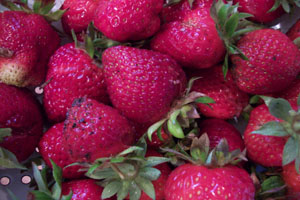
 Spring has officially sprung. The bulbs are peaking up through the cold ground, buds are visible on the apple trees, and the birds have started chirping. From the moment we spring forward into daylight savings time, my mind turns to thoughts of planting our vegetable garden. There is nothing quite like walking out into the garden and eating something freshly picked. I could not LIVE without it. At this time of year cold hardy seeds can start to be planted. Cold hardy seeds would be any kind of pea or lettuce, leafy greens like kale or spinach. It is a great way to get out of winter hibernation and start thinking warm weather. Bartlett’s Farm has a wonderful selection of all kinds of organic seeds to choose from. With the garden center now officially open, browsing though the seed packets and chatting with some of the super knowledgeable garden staff is sure to inspire. If you haven’t done so already think about designating a small corner of your garden to edible plants. It is easy to build a raised bed from scrap wood or a pre made kit, then start planting your favorites. Maybe you don’t have room for a raised bed and can’t bear to give up your flower bed? A dear friend of mine plants his flower garden by intermingling his favorite herbs and vegetables throughout the patch. It is a truly beautiful and unique way to plant. It is easy to be overwhelmed at first when thinking of planting a vegetable garden, start small and branch out from there. If seeds aren’t your thing, think about edible landscaping. Why not plant a fruit tree, or a blueberry bush? The time and effort spent digging will be well worth it when you can pick a fresh apple and taste the difference. I was asked once to name my favorite vegetable. I started by saying asparagus. Of course anyone who knows me knows that it is impossible for me to choose just one. My favorite is ususally the one that I have just finished planting or eating. I probably picked that initially because when I think of asparagus I remember digging the trenches with my husband ( it took hours), I remember being covered in mud (it was cold and wet), I remember seeing the first stalk emerge in the spring and I remember waiting 3 years to eat any (I forgot about that part). The first stalk I ate was the most delicious stalk of asparagus I had ever tasted. We planted it together, we waited, we were patient. There is a real joy in growing your own food. Great stories emerge, laughter ensues, and a delicious meal is sure to be had by all. Happy Spring. Happy planting! A great resource for pre-made raised beds:
 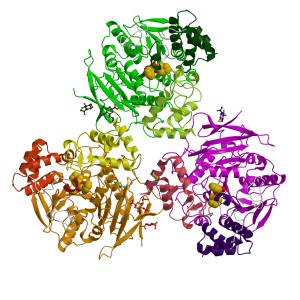 The food we choose to EAT is one of the most important decisions that we can make when it comes to maintaining our health. The more fresh fruits and vegetables that we can incorporate into our diet the healthier we will be. In fruits and vegetables there is a life giving element that exists: enzymes.
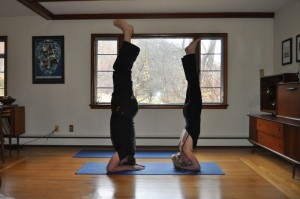 Salamba Sirsasana or Headstand is known as the King of all Yoga Poses. The reasons are many. It affects every system of the body: the cardiovascular, lymph, endocrine, and digestive systems. It reverses aging, increases blood flow to the brain, regulates pituitary and pineal glands, enhances circulation and creates mental clarity and calm. It allows you to literally turn your world upside down to gain new insight by changing your perspective.
 When I was in high school my mother gave me two wonderful little books of philosophy called Notes to Myself and How to Live in the World and Still Be Happy by Hugh Prather. I read them over and over again throughout my life, his simple words always seemed to make sense, to calm and reassure me. I carried the books with me until they were so dog eared and highlighted that they literally fell apart. Even now, so many years later, his words are ingrained in my memory. One of my favorite Hugh Prather quotes is: “LIVE your life as if everything you do will eventually be known.” Now that is a tall order.
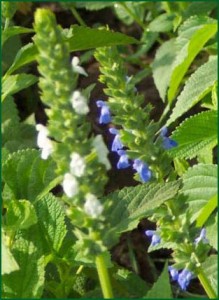 Chia seed is an ancient superfood. It is a member of the mint family: Salvia Hispanica. The little seeds were once a staple of the Incan, Mayan and Aztec cultures, along with the Native Americans of the southwest. Chia is actually the Mayan word for strength. The seeds were used by these ancient cultures as energy food, especially for their running messengers. In the southwest United States chia seeds became known as “Indian running food.”
 Happy February. Happy Valentines Day.